Neuroplasticity
Neuroplasticity is the brain’s lifelong capacity to reorganize itself by forming, strengthening, or pruning neural connections in response to experience, learning, and environment. It’s not a metaphor, it’s a literal physical restructuring of brain tissue.
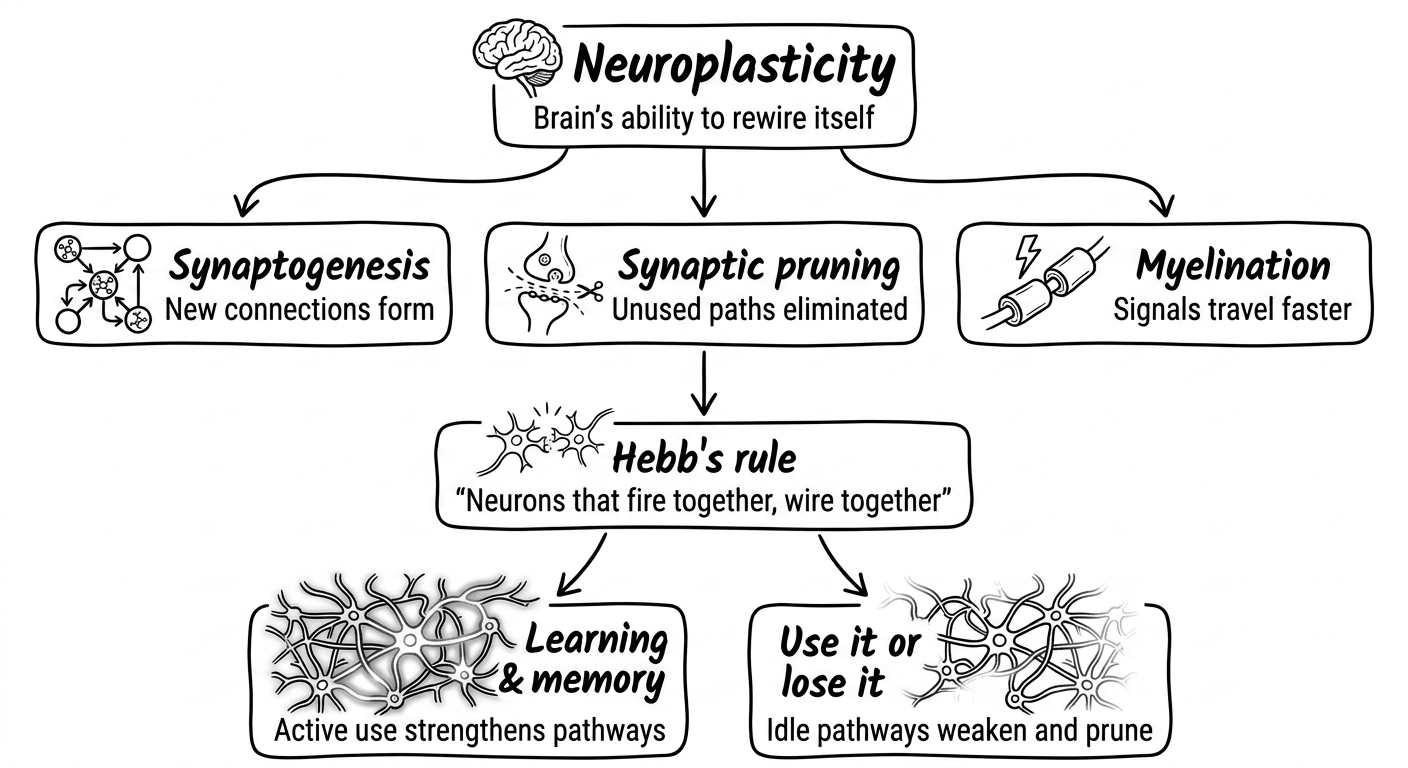
The three mechanisms are :
- Synaptogenesis : building new synaptic connections
- Pruning : eliminating pathways you don’t use
- Myelination : brain wraps the pathways you use most in a protective layer, making signals travel faster. The more you repeat something, the quicker and smoother that connection becomes.
How to drive neuroplasticity
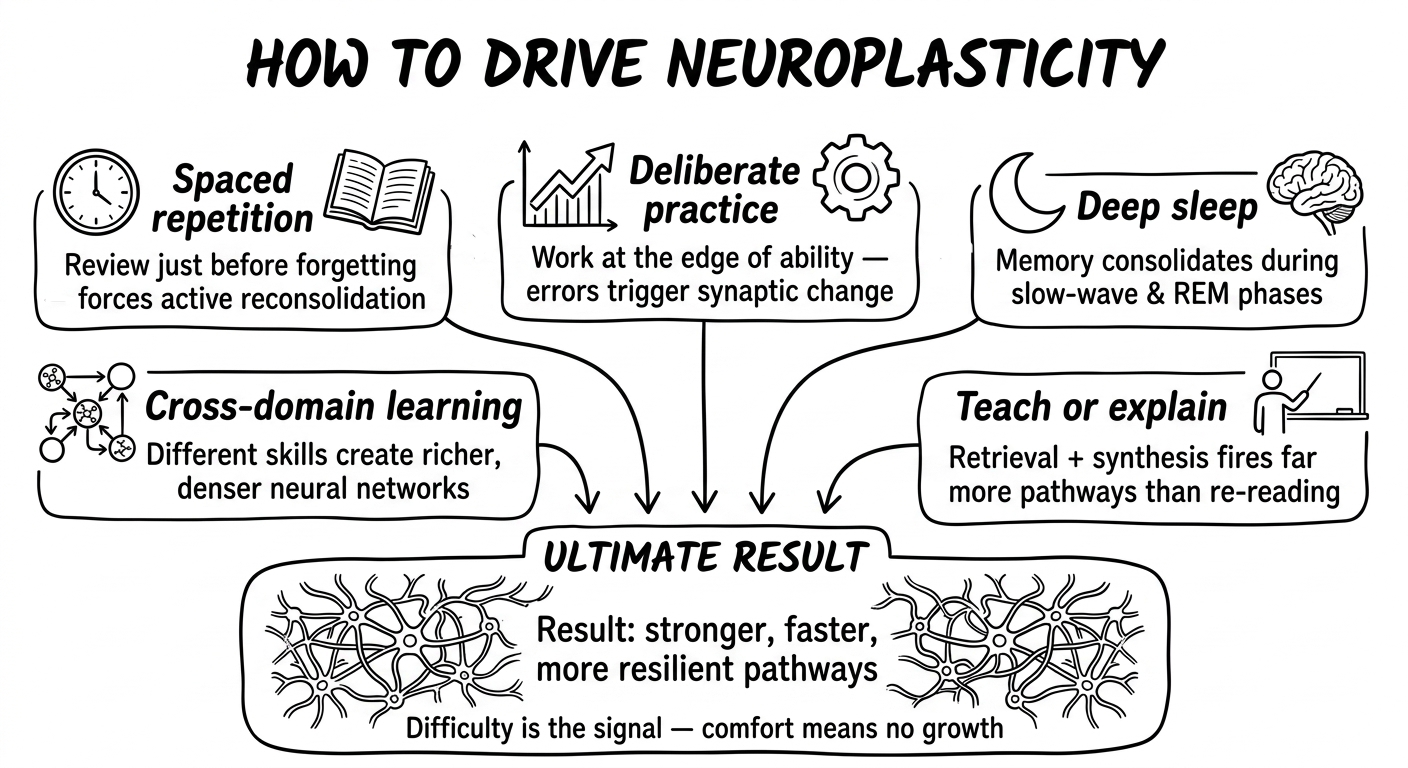
The common thread across all these strategies is effortful engagement. The brain only restructures when it’s challenged. Easy, passive input produces little to no lasting change, which brings us to the critical modern problem SOCIAL MEDIA !
Here’s the core problem in plain terms: your brain optimizes for whatever you do most. Social media feeds are engineered to deliver the maximum dopamine hit for the minimum cognitive effort. Short, novel, emotionally charged content that requires no sustained attention, no memory, no reasoning.
Do this for hours a day, and neuroplasticity works against you:
- Attention span contracts : the brain prunes pathways for sustained focus because you rarely use them.
- Boredom becomes unbearable : your default mode network never gets quiet time, which is where insight, creativity, and memory consolidation actually happen.
- Memory encoding degrades : you’re consuming but never retrieving, which means nothing sticks. Retrieval is what converts experience into durable memory.
- Reading depth drops : studies show heavy social media users increasingly skim even long-form text, searching for the punchline.
The good news is the same principle that creates the damage can reverse it.
Neuroplasticity is lifelong. Even a few weeks of deliberate reading, journaling, focused practice, or learning a skill begins rebuilding the pathways that passive scrolling eroded.
The brain is not fixed ! it follows the demands you put on it.